Assembling a great wardrobe can take a lot of time, effort and of course, expense. When done well, it is not something you “do”; rather it becomes a process spread across the days of your life. Because investing in custom suits or dress shirts, those perfect chinos or Ravello shell cordovan wingtips from Alden is only half the battle.
The other half of that ongoing endeavor is properly looking after your investments. Keeping your clothing and accessories in great shape takes a little work but that effort will pay off in long-term use and the wonderful, classic patina that only time can provide.
Having Ralph Lauren’s closet (above) sure doesn’t hurt either. For additional inspiration, check out these other outstanding closets.
all that being said, though the natural aging of fabric and leather and wearing down of cuffs and elbows are normal, and often quite charming, these inevitabilities should be held off as long as possible. Doing so allows your possessions to keep their appeal while still developing the character that makes you want to keep them around for years to come.
Here are a few basics that will help your cherished clothes last longer while still looking great.
Hangers
First, invest in good wooden hangers – there is no way around it. Wood hangers support your garments, help preserve their shape and are aesthetically appealing. While any sturdy wooden hanger is better than wire or plastic, hands down, some of the finest I’ve ever used come from Kirby Allison’s Hanger Project. They are built to last and to protect the integrity of your clothing. While not inexpensive, as an investment in your fine garments, they will probably outlast you and ultimately return handsomely on their capital outlay.
Second, use them! When done with your clothes for the day, hang everything up. If dirty, throw it on the laundry or take it to the dry cleaner – just don’t pile things up on the floor. Using a solid and well sized wood hanger (suit hangers for suits, slimmer hangers for shirts and felted bar hangers from trousers) will add years to your clothing and help protect your garments from snags, wrinkles and stains.

Make a point of keeping your closet in order too, so no crowding. Garments need room to breathe and space to air out. In most cases, wrinkles will work themselves out in between wearings. An impromptu steaming can help too – just hang your day’s outfit next to the shower. A clean and orderly closet is also inspiring. If you open the door and see a curated collection of favorites, getting dressed is a fun and fulfilling process.
Dry Cleaning v. Brushing
In general, most suits and sport coats only need to be dry-cleaned once a year. Delicate fabrics and linens may need more attention, but on the whole brushing your garments with a clothing brush will remove most dust and dirt. Spot cleaning can address minor stains and help avoid unnecessary trips to the cleaners. If your suit is looking a little too lived in, go ahead and take it in for a pressing only. It will look refreshed without being unnecessarily exposed to damaging dry cleaning chemicals.
Laundering Shirts
Though some people insist on dry cleaning their dress shirts, I prefer to launder them at home. When it comes to home laundering, cold water is usually best but always look for the care tag first. Iron on a slightly cooler setting and lay off the starch.

If you are still compelled to use it, than starch only those areas that can get a little unruly, like cuffs, collars and plackets. If you regularly send your shirts off to the cleaners, pass on the starch there as well. Commercial presses do a fine job of working out wrinkles without the need for extra chemicals. When ironing at home, always remember to iron the backside of the shirt’s collar. For cuffs, iron the backside of barrel cuffs and the reverse, the inside side, of French cuffs also called double cuffs.
Footwear Care
Nowhere else does the concept of “investment clothing” hold forth than with footwear. A good pair of quality business shoes can easily cost several hundred dollars and only move northward. Custom shoes quickly reach into the thousands. Though it can be a big financial hit up front, good shoes will always being in style and when properly cared for, can last a lifetime. Though they may seem an extravagance (and for many of us they are), custom shoes in addition to looking great, will help keep your feet healthy. So as a general rule, keep your footwear in top notch shape.
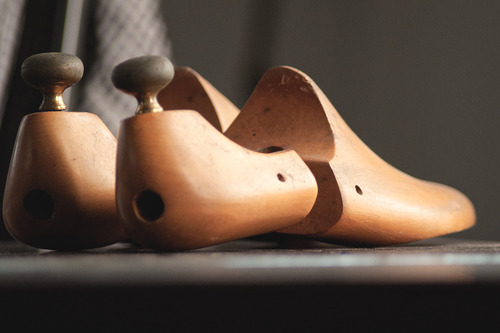
In addition to protecting your dress shoes’ leather with regular polishing, make sure to always use shoe trees. There are many variations, but the best are full-sized and made from untreated cedar. The shoe tree will absorb moisture and help maintain your shoe’s shape. Fancy varnished trees are fine too – the kind with heavy brass knobs or pull rings – in fact I’m looking for some myself.

Be careful to not overuse your good shoes. Don’t wear the same pair day after day; they need to rest and dry out. After you get home, give your shoes a quick brush down, insert the trees and give them a few a day or two off. Should you get stuck in a rainstorm or have to tramp through snow, do not try and quickly dry out your shoes; that can permanently damage your fine footwear. Instead, stuff them with newspaper, set them in a room-temperature place and leave them alone. Change the paper if it gets damp but don’t rush the process. Also, make sure to brush off road salts or dirt immediately. Once the leather has air dried, insert your shoes trees and give them a good polish and waxing to recondition the leather.

Shoe trees at work
In fact, splurge every now and then for a really good shoe shine. In addition to being a fun, classic and masculine endeavor, a professional once-over is good for your shoes and extends their life. One of my favorite stands is in Washington, D.C.’s Union Station – right by Amtrak’s F Gate. Those guys are the best.

Union Station Shoe Shine
When you get down to it, taking care of your clothing should not been seen as a chore; quite the opposite in fact. To me, looking after my clothes is a pleasure and since I’ve put a lot of effort, time and thought into my wardrobe, taking care of it all is a happy ritual.
Ravello Shell Cordovan