Frank Clegg, Welcome to the White House

Obama Clegg Oval 5.8.13 Frank Clegg, Welcome to the White House

Brand building is a tricky business.  Try too hard and people don’t trust you, try too little and they won’t even know you exist.  Brands with history, and a history of doing something well, have a big advantage.  “Authentic” brands possess the quality of longevity and substance – particularly in today’s market.

In an attempt to take advantage of this trend, some companies tout embellished histories or toss around the word “heritage” with casual abandon.  They want you to buy into their version of history or their new brand’s freshly imagined “vintage” past.  Then there are the guys who actually make stuff, make it well and often forget to toot their own horn.  They are craftsmen first and marketers second; a rare bird, frankly.  They don’t “market” heritage, their products are their heritage.

So, when the president of the United States went looking for just the right Made-in-America briefcase, he headed directly to Fall River, Massachusetts, and the workshop of Frank Clegg, owner of Frank Clegg Leatherworks.

The briefcase you see at President Obama’s feet in the official White house photo above, propped gently against the legendary Resolute Desk, is Frank’s Double Gusset Zip Top Briefcase, in black harness belting leather.

Exactly how did that outstanding briefcase find its way into the president’s hands?  Apart from being one of the finest leather craftsman in the United States and having a roster of devoted customers that literally spans decades…well, Frank won’t say.  He confirmed that said briefcase is indeed from Frank Clegg, but beyond that he said simply that he is humbled and honored that it accompanies the president.

OTC is an unabashedly proud and longtime supporter of Frank and his exceptional products.  As we said in what is perhaps our favorite post, “Frank Clegg doesn’t just make leather bags; he crafts heirlooms, one at a time, by hand.”  For Frank and his craftsmanship to be honored in such a remarkable way is not only fitting, it is validation of function over mere form, substance over flash, and actual heritage over marketing.

Mr. Clegg, welcome to the White House.


Old Bull Lee Shorts

Old Bull Lee1 Old Bull Lee Shorts

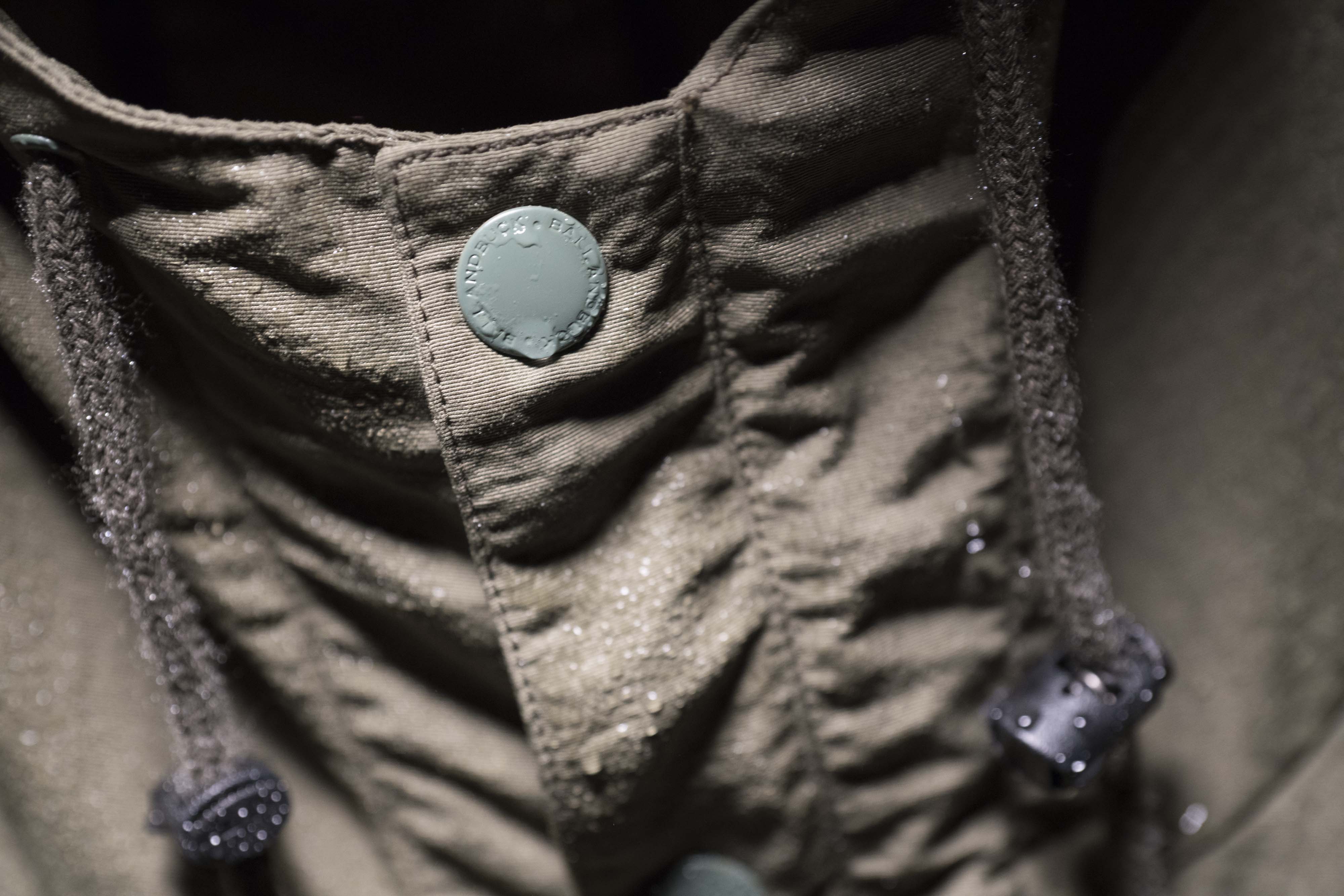
To be honest, the buttons were the first thing we noticed.

All of the shorts made by Old Bull Lee – and they only make shorts – have button fly openings.  And, the buttons that founder Lee Johnson chose to use are very specific; thick, sturdy, branded, and slightly over-sized. You notice them because they are not simply functional, they are part of the overall design.

That these buttons have a quality that is hard to define, but which unquestionably add to the shorts’ overall character, is not by chance.  Johnson, a former architect, knows from design and his shorts reflect that attention to detail, construction, and quality.

Depending on what model you chose, Old Bull Lee shorts are either bohemian cool or long-lived classic.

The prints, rendered in lightweight (190 grams-per-square-meter) Italian cotton, have a wonderfully relaxed yet sophisticated look to them.  They would be perfect for strolling the weekend antiques market in L’Isle sur la Sorgue, paired with an favorite old white linen shirt – sleeves rolled up in the warming sun.

Old Bull Lee2 200x300 Old Bull Lee ShortsThe solids are cut to the same design, but in a beefier 290 grams-per-square-meter cotton and finished in a Japanese peach finish twill.  At first, they have a deeply uniform coloration, saturated, almost.  But, with some time, use, and a few washes, a nuanced faded appearance sets in and they take on a look of comfortable familiarity.  All of their fabrics are sourced from France and Italy and the garments are made in the United States.

As an added bonus, each pair of shorts arrives carefully presented inside a beautiful, sturdy navy presentation box that makes Ralph Lauren’s look like something from the dollar store.  Really, we love the boxes.

Old Bull Lee’s story is one of passion and determination.  Johnson sold his house to finance the dream, traveled to Europe to make connections, endured rebuffs and rejections, and eventually wound up producing something that embodies his dedication to craft.  Yes, they are “just” shorts.  But, they are the shorts we want to wear, made by the kind of guy we love introducing to OTC readers, and constructed in a way that honors Lee Johnson’s goal of doing it right.


Old Bull Lee No. 011 Old Bull Lee Shorts

Old Bull Lee No.005 Old Bull Lee Shorts


Wardrobe Upgrade: Ribbed Tee

Ribbed Tee V Neck Wardrobe Upgrade: Ribbed Tee

Over the past several months, we have had the chance to review a variety of products that are redefining a wardrobe staple that seems to have gone unchanged in any meaningful way for decades; the undershirt.  For many men, especially those who dress up for work, an undershirt is a necessity but also a burden.

Too often, they are spun from heavy cotton, sized like small boxy tents, and bunch up under all but the fullest cut shirts.  One reason we are excited about this new crop of brands that are re-thinking the lowly undershirt, is that the changes they bring are making a real difference in the market.  These “next generation” base layers are more comfortable and fit much better that what’s on the store shelf, and they actually match the way we live and dress today.

Ribbed Tee is a great example of this updated thinking.  Made in the USA, their undershirts and tees combine excellent quality, soft but supportive materials and a solid design that fits comfortably.  The 50/50 combed cotton and polyester blend Retro Fit v-neck undershirts we tested are incredibly lightweight, so much so that we could barely feel them.  The wide neck opening remains well-hidden when wearing an open neck shirt.

The shirts themselves are cut long and pose little risk of ever coming untucked. They also have a high cut sleeves that stay out of the way when worn under a polo or other short sleeved shirt.  The loose jersey knit MicroModal fabric means that the shirt hugs your body without any binding or constraint.  It’s a great fit under a slim dress shirt but still feels incredibly comfortable.

We also tried out their classic fit crew neck in heather grey, which was equally comfortable and possessed many of the same material features as the the undershirts: streamlined fit, trim design, featherweight fabric, and a long stay-in-place cut.  The mico-ribbing pattern is reminiscent of a classic thermal tee, and provides some visual texture when worn by itself.  It’s also an excellent layering piece, especially due to its ability to provide real style without any bulk whatsoever.  However, if you plan to wear it as a stand-alone tee, some fair warning – you better be in shape.

Ribbed Tee Retro Fit Via Por Homme Wardrobe Upgrade: Ribbed Tee


OTC Find: Anson Adjustable Belt

Anson Belt1 OTC Find: Anson Adjustable Belt

For some guys, finding a good belt is often a challenge. If you have an odd-sized waist, most belts are too loose or too tight. And, depending on your pants – dress trousers or jeans, for example – your belt may simply not fit the way you need.

One option we recently tested out is a cleverly designed micro adjustable belt from Anson Belt & Buckle, a father-and-son run company. They offer a line of men’s micro-adjustable, hole-less belts. Instead of five holes one inch apart, their belts offer 30-plus options a ¼ inch apart, thanks to a micro-adjustable track system sewn into the back of the full leather strap.

With a variety of strap and buckle colors, the ability to mix and max lets you create a belt that truly meets your needs. We liked the open buckle design that is neutral enough to work with most wardrobes, particularly smarter casual looks, but also strikes a modern, elegant note.

For some guys, this is the Holy Grail of belts, and will prompt them to toss out everything else. Others may see it as a welcome addition to the wardrobe. Here at OTC, we really like the ability to grab at least one belt out of the closet that always fits just right.


Jon Green is a celebrated New York-based bespoke clothier well-known to readers of Forbes, The Financial Times, and American Express’ ‘Departures’ magazine. His loyal and exclusive customers who typically operate in a rarefied air of luxury and quality, can demand, and receive, the best.

Jon, a true gentleman and passionate craftsman, is a good friend of OTC.  He possesses the unique ability to make both a globe-hopping corporate executive and clothing neophyte feel equally respected and appreciated.  At his core, Jon is an educator and historian of all that is ‘bespoke.’

In this guest column, he provides a thoughtful and educational retort to last year’s New York Times article on bespoke tailoring.

16K3804 Luxury Clothier Jon Green Talks Bespoke

The article, “What’s a $4000 Suit Worth?” appeared in the Sunday New York Times Magazine of September 4, 2012. Written by Adam Davidson, an American journalist focusing on business and economic issues for National Public Radio, he also writes the “It’s the Economy” column in the New York Times Magazine.

As a bespoke clothier on Madison Avenue for over 20 years, I read Davidson’s article with great interest.

For the article Mr. Davidson interviewed Peter Frew, a 33-year-old Jamaican born bespoke tailor who apprenticed in Savile Row, London. Mr. Frew, who now works out of his apartment in Queens, makes bespoke suits for clients entirely by hand and by himself. This endeavor takes him 75 hours for each suit, or about 2 suits per month.

Initially, Davidson’s contact with bespoke craftsmanship prompted his acknowledgement of what a skillful tailor can achieve with shears, needle and thread, and his hands. But his excitement quickly faded after learning that in spite of charging $4000 for his suits, Frew made only about $50,000 a year.

“As I watched Frew work, it became glaringly obvious why he is not rich,” Davidson observed. “Like a 17th-century craftsman, he has no economy of scale,” a very powerful point for the author in this discussion. Davidson goes on to say that, “the odd riddle” of bespoke tailoring in our economy is why more people are not willing to pay for it.

One reader responding on-line put it this way, “Bespoke clothing is one of those things you either ‘get’ or you don’t!” That certainly has been my experience.

It is unreasonable to expect that those who find ‘acceptable’ preferable to ‘optimal’ would appreciate the psychic income of a bespoke suit. The lack of appreciation for quality in our culture is profound.

In either case, Davidson missed a great opportunity to enlighten his readers, and perhaps himself, about the value of “Bespoke” clothing.

16K3553 Luxury Clothier Jon Green Talks BespokeThe craftsmanship required to make a bespoke suit has been passed down for centuries through years of training and apprenticeships with master tailors; artisanal craftsmanship develops over a lifetime.

Conversely, ‘an economy of scale’ requires mass production; bespoke clothing cannot be mass-produced.

In today’s marketplace, luxury goods exist primarily as brands of the giant luxury goods conglomerates PPR (Pinault-Printemps-Redoute) whose brands include Gucci, Botega Veneta, Stella McCartney, et al, and LVMH (Louis Vuitton • Moët Hennessy) whose brands are Fendi, Pucci, Givenchy, Berluti, Bulgari, et al. These conglomerates buy artisanal businesses with good reputations and restructure them as profit centers by employing “economies of scale.”

Suzy Menkes, a British journalist and head fashion reporter and editor for the International Herald Tribune since 1988, reflects in her December 6, 2012, New York Times article, on the everlasting style and taste of Valentino Garavani’s retrospective in London’s Somerset House. In it she opines, “Is that alta moda era gone forever with the corporate luxury culture and the tsunami of fast fashion?”

It would be a sad irony indeed to have the money to buy whatever you desired only to have the choice of branded “merchandise” available in malls and airport shops all over the world.

Bespoke vs. Made-to-Measure clothing – Since the early twentieth century there has existed a grey area of garments between the poles of bespoke and ready-to-wear; for which the customer was measured and garments made to the closest standard size in a factory. The distinction made here is between bespoke, a paper pattern created specifically for a client, and made-to-measure, which alters an existing pattern to accommodate some changes for the customer.

Technological change makes this distinction more subtle since fittings are increasingly required for both bespoke and made-to-measure. However, a bespoke service requires an individually created and cut paper pattern kept on file for future orders. Today made-to-measure measurements are often stored too, on a computer.

DSC 0105 680x1024 Luxury Clothier Jon Green Talks BespokeHand-work, often cited as an exclusive benchmark of bespoke, is now increasingly found in limited amounts in made-to-measure garments. Machine-making plays a small part in the creation of most bespoke suits in the sewing of some straight seams for strength and smoothness. Comparison between the construction techniques of bespoke and those of made-to-measure must be experienced to be understood.

Like many others, Davidson lacks the above distinctions, which may explain why Martin Greenfield is identified in the ‘Slide Show’ accompanying Davidson’s article on-line as a “Bespoke Tailor.” Martin Greenfield is a manufacturer whose factory makes ready-made and made-to-measure suits for retailers, tailors, and customers, by the tens of thousands each year.

All of us differ on what we think is ‘worth it.’ Many men, rich or not, would not consider paying even $1000 for a suit. Not because they can’t, but because they don’t see the point.

But for the receptive, a bespoke suit is the perfect expression of artistry and function – an irreplaceable essential whose quality provides the satisfaction that an economy of scale can only promise.

People buy solutions; and to my mind, nothing meets the daily requirement of being well dressed as superbly as a bespoke suit.

Jon Green Bespoke
509 Madison Avenue
New York, NY 10022


Additional images of Jon Green’s bespoke craftsmanship:

 Luxury Clothier Jon Green Talks Bespoke

DSC 0068 2 Luxury Clothier Jon Green Talks Bespoke

 Luxury Clothier Jon Green Talks Bespoke

 Luxury Clothier Jon Green Talks Bespoke