Best Travel Shoes: Austen Heller

Austen Heller Loafers Best Travel Shoes: Austen Heller

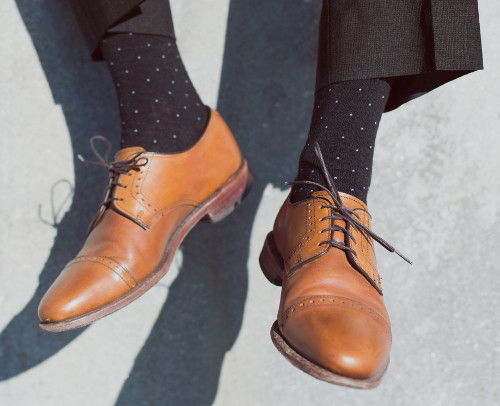
When we went looking for the perfect travel shoe, there were a few key criteria that had to be met.  First, we wanted a slip-in style shoe; something easy to get in and out of at airport security checkpoints.  Second, they had to be comfortable without feeling too much like slippers.  And last but not least, they needed to work in casual and dressy situations.

Austen Heller loafers check all the boxes.  They successfully bridge the gap between dressy and casual, while also proving to be sturdy and sharp-looking. Austen Hellers have a unique look that is part American boat shoe, part European driving moccasin.  And, for OTC readers, they have a special deal.  Get an extra $50 off your next pair of Austen Heller shoes when you use the checkout code “OTC50.”

Started by a guy who simply could not find the kind of shoes he wanted, Austen Heller combines old world craftsmanship with distinctive style.  The shoes are handmade in Europe using premium leathers, with a simple design that focuses on style, comfort, and quality.

Each pair even comes with their own set of shoe trees.  And, with a price tag of $195, picking up some practical footwear flair won’t knock you off your feet.  Lastly, keep an eye on this brand because some exciting changes are coming in the coming months.


DF12 12.18 GQlo 104 GQ’s Glenn O’Brien: Setting Your Own Style Agenda

Recently, OTC had the chance to spend an evening with Glenn O’Brien, best known as GQ’s legendary Style Guy.  He was in town to celebrate the launch of the fall/winter GQ Style issue at DC’s elegant new nightspot, The Huxley.  Earlier in the day, we sat down with O’Brien at his suite in the Ritz Carlton.  While it is always fun to meet a well-known figure, perhaps the most impressive thing about Glenn is that style does not seem to impress him very much.

Without question, Glenn is on the inside of the fashion world.  He knows the people worth knowing and has access to the designers, brands, and luminaries we all read about.  Glenn is witty, wry, intellectual, and observant; traits which have served him well over the years.  However, for a “fashion” writer, he is an odd fit in the best of ways.  First and foremost, he’s a writer.  He is interested in people and stories, ideas and the world around him.  Glenn is far more curious about who you are than who you’re wearing.  If anyone has been there and that, it is Glenn.

Compared to the often overwrought dandies that populate the style blogosphere, Glenn O’Brien’s sense of style is wonderfully prosaic; suits, blazers, nice shirts, classic ties and jeans, and the occasional weathered biker jacket and Picasso beach shirt. He has a distinctive look and way of assembling these classic elements that reflect his own history and personality.  Glenn does not need to impress anyone with just-so outfits, skinny suits, or anachronistic dandyism.  Not that he is opposed to any of that, by the way; when asked about the landscape of today’s blog-driven fashion and vintage-inspired sensibilities, Glen embraced it all.  When is comes to trends and the vagaries of fashion, he’s very open-minded.  In fact, his favorite suit is actually from the mid 1990s.  “Yeah, it’s out of fashion, but I love it,” he says.

Scott S. The Sartorialist GQ’s Glenn O’Brien: Setting Your Own Style AgendaBlogs, he noted, have democratized the means by which style and fashion evolve.  “Say what you want about Scott’s [Schuman] site, but The Sartorialist has created a new way for people to explore fashion,” said O’Brien.  “The real-world nature of the photos is great; it allows you to experiment on your own and not rely on corporately constructed ensembles.”

That theme – the natural evolution of personal style, versus “assembled” style – was a thread woven throughout our conversation.  What the Style Guy appreciates most is personal expression and the willingness to value quality, construction, details, longevity, and patience.  Wear what you like and be proud of it.

This sentiment was best expressed when we chatted about mutual friend, the legendary menswear author and designer, Alan Flusser.  Alan, known for his impeccable style and ability to assemble beautifully classic wardrobes that best compliment the wearer’s coloration, physique, and personality, is also a fan of comfort.  One of his lesser appreciated skills is marrying the formal and informal – such as the day he sported a bespoke linen blazer and shirt, natty pocket square, electric blue Todd’s Gomminos, …and slate grey Nike wind pants.  Took about a half-hour to realize he was even wearing them because he made it work so seamlessly.

Such expressions of personal style are indeed personal, and they don’t work for everyone.  That’s OK; such is  the beauty of true style and importance of personal expression.  Real sartorial skills take time to learn and experience to develop.  Truly good style requires personal honesty, and when achieved is distinctive, admired – sometimes mocked – but often noteworthy.

We asked about something Flusser often states; that today there are no real male role models when it comes to style.  While there are celebrities who dress well, these stars are often outfitted by others who have mapped out a sponsored image for them.  Or, they dress by contract; disinterested in style themselves and playing the role of living mannequin to paying brands.

Alan Flusser 2011 Dennis C. GQ’s Glenn O’Brien: Setting Your Own Style AgendaGone are the days, says Flusser, when the likes of Cary Grant or Gary Cooper embodied the values of male sartorial attention to detail.  They had a keen appreciation of tailoring and personal expression and they understood the power of projection sophistication coupled with nonchalance.  True, notes O’Brien; but they also had the benefit of being studio actors who had at their disposal dedicated wardrobe departments.  Today’s celebrities are essentially freelancers, solo brands out to define and effectively telegraph their public persona – often for a fee.

When asked to name some leading male style role models, The Style Guy said that, frankly, the best dressed men he knows are often civilians – doctors, lawyers, businessmen. They simply have the interest, ability, and inclination to learn what works and what they actually like.  These everyday guys are not embarrassed to care about the details of fashion, and they appreciate its impact in their professions and how they are perceived.  That said, he did mention the likes of Andre 3000 and Rolling Stones drummer, Charlie Watts, as examples of well-known sartorial class acts.

Glenn is old school, and that is one of his strongest assets.  He is ecumenical when it comes to the breadth and depth of fashion out there today.  Never disparaging, he defended the popular “Made in Brooklyn” meme that is beginning to spawn its own bit of mockery.

“I’m tired of hearing about ‘ironic’ mustaches or ‘ironic’ Brooklyn shops.  There is no irony as far as I see,” he says.  “These folks looked around, saw the future, and said, ‘we don’t want that; we’re heading in the other direction.’  Good for them.”

All those handmade satchels, small batch suits, custom shirt makers, vintage fabric bow ties, and hand-welded city bicycles are what’s driving the resurgent interest in menswear and American urban style.  They are making real things that consumers want, and all that “irony” is being riffed on by the big corporate brands…ironically.

DF12 12.18 GQlo 117 GQ’s Glenn O’Brien: Setting Your Own Style Agenda

Watching Glenn work the room at DC hotspot, The Huxley, it was clear that he is someone comfortable in his own skin.  Overall, he was surrounded by a stylish crowd, although some guests were trying a bit too hard to be GQ-awesome while others appeared to have opted for a cautious DC law firm look.

Looking somewhat professorial in a simple Anderson & Sheppard grey suit, blue checked shirt, and yellow tartan tie he wore his famously inscrutable expression with aplomb.  When informed that we were chatting with O’Brien, Alan Flusser responded without hesitation, “Glenn is one of the few forces for intelligent manners and intelligent fashion.”

Gentlemen, all the way around.


How to Dress Well

MrModenese1134Web via Sartorialist How to Dress Well

A reader recently posed to us an interesting question that gets at the heart of dressing well: does it matter what you wear when no one is looking?

This gentleman has the benefit of often working from home, and when not there, is frequently on the road. When working from his home office, our friend’s work wardrobe barely moves beyond college tee shirts and old shorts, or on a chilly day, jeans. On the road he has a few suits that he says do little for him on the style front. And while he does want to project a polished image, his main complaint is that he does not know how to come across as a professional without a suit.

He sees donning a suit as an obligation based on his audience for the day, but does not know how to “modulate” his work wardrobe to allow for some other options that let him express some personal creativity and style. For starters, a suit is by no means the only “dress up” thing in a man’s wardrobe.

Too often, men see dressing well as a chore, something to avoid, or something against which to fight.

For some it’s a latent fear of dandyism. Other times, it is a misguided sense of self-righteousness; a feeling that you’re fighting conformity, not buying into the “suit” thing – you know, being more real.

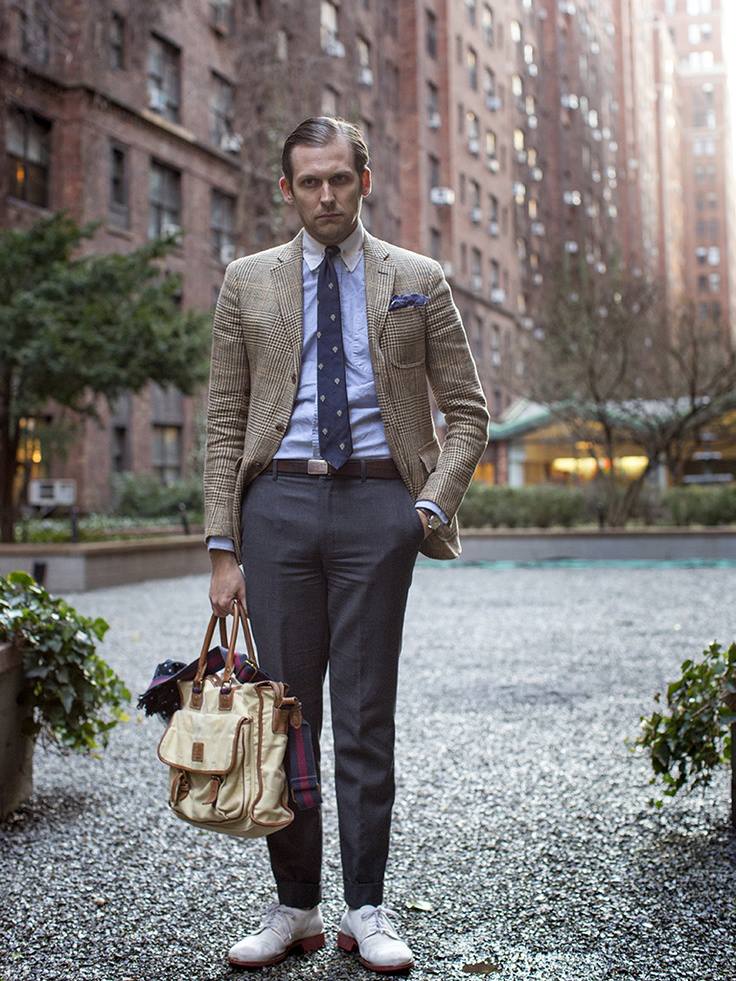
That philosophy usually ascribes that one simply conform to a different model of “conformity.” Dressing like a perpetual college student in order to make a statement is very much its own model of conformity.  As the fellow in the picture above clearly demonstrates, flair, panache, and confidence know no age.  His comfortable dapper outfit would look equally at home on a man half his age.  Alas, too many men half his age would not have the confidence to step out so well attired.

Dressing for Yourself & Others
There is a world of style and personality between flip flops and a three piece suit. Rolling out of bed and shuffling down the hall to check the email is not the point here. However, when you step out of the house or log onto a video conference, there is a certain social contract into which we enter. What you have on now matters. Once you start interacting with other people in you ought to show them the same level social and sartorial respect you yourself would expect in return. You should make an effort to dress well because you want to.

The first rule in dressing well is that you should always be comfortable and true to yourself. The second rule is the equally important fact that whether you like it or not, people judge you by how you dress, how you carry yourself and treat others, your social skills, how you speak, etc. Research has repeatedly shown that on average, it takes about eight seconds for an individual to decide what kind of person you are and it can take years to alter that initial perception. How you react to this universal truth is your choice.  This means creating appropriate wardrobes that reflect your sense of self, but which are appropriate for the situation in which you find yourself.

Clothing is one our most obvious and influential social markers. How you choose to dress directly impacts what people think about you and, often what you think about yourself. Radical changes are not always necessary; getting new jeans in a darker wash that fit well or buying some new dress shirts that work with or without a tie take make a huge difference in how the world sees you.

In our reader’s case, we suggested updating some of his separates as it turns out he does not have to wear only a suit when he travels for business. A new blue blazer and a couple of sport coats, new shirts that actually fit, and new flat front dress pants significantly updated his professional appearance. Having everything properly fitted and tailored cost a bit up front, but he told us afterwards that how he sees himself has changed dramatically.

Fit & Quality
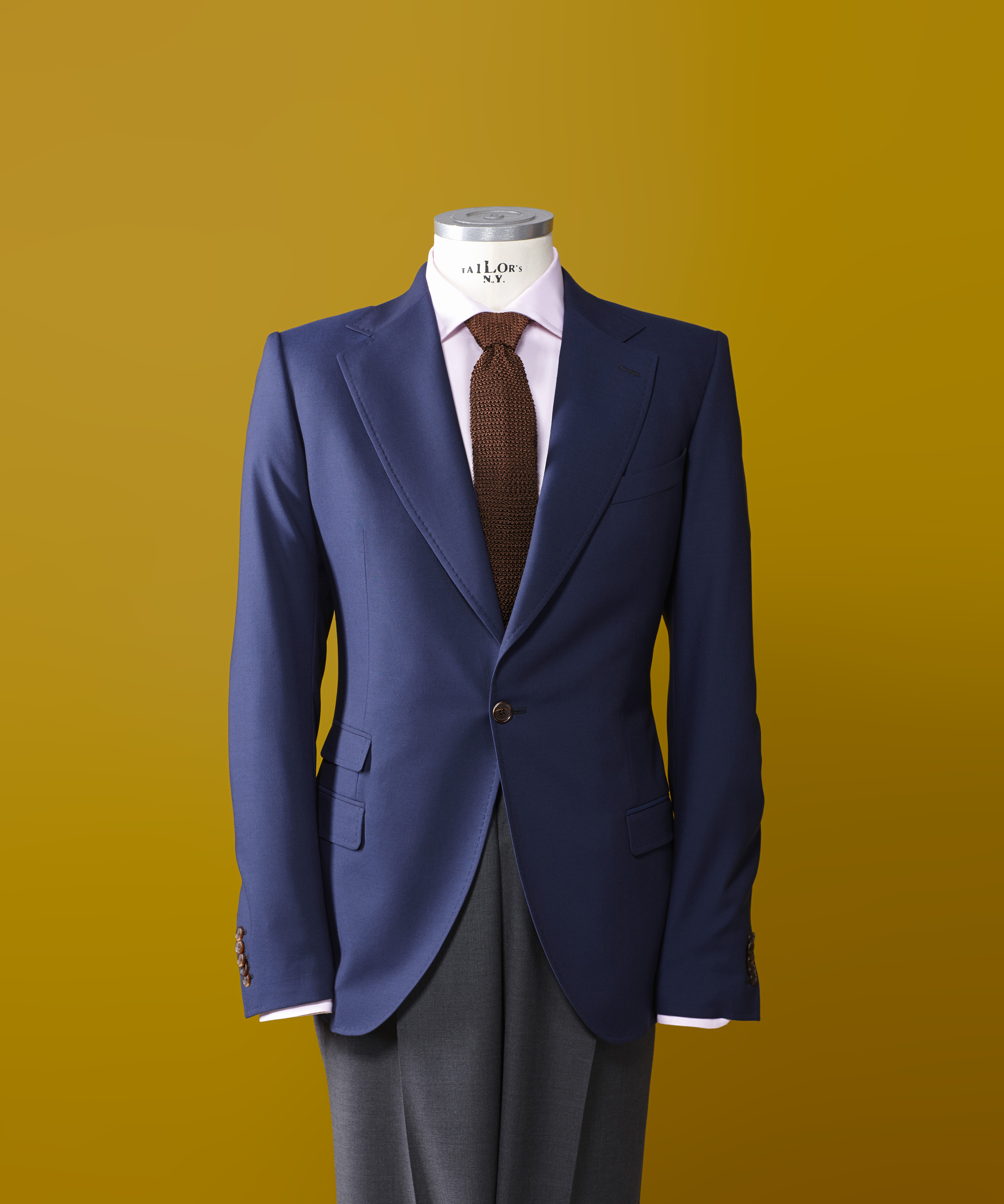
If you choose or are obligated to wear a suit every day than take the time to learn what makes a great suit great. Pay for quality, fit, and construction.  It’s often more than you might prefer, but these things are the sartorial equivalent of a capital investment. And never forget that fit is what matters the most; for suit coats, sport coats, or blazers, this means shoulders. A properly fitted shoulder is the foundation of a jacket that properly fits its wearer. After that, the overall proportions will vary by individual body type and preference. Learn what you like: fitted and trim or loose and flowing, shorter or longer jacket skirts, one or two vents, two or three buttons (or double-breasted). Do you prefer a more European armhole that sits tighter to the shoulder or something less fitted?  Natural or structured shoulders?

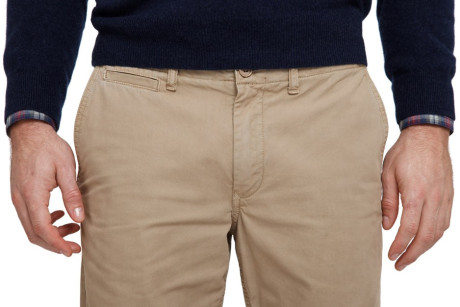
The same type of rule holds true for trousers. If the fit is wrong, nothing else really matters. Do you prefer pleats or flat fronted trousers, full break or no break on the pant legs, what kind of rise? Trousers should always be comfortable whether sitting, standing, or moving.

Your dress shirts should flatter your physique, not envelope it with yards of fabric – or strain at the buttons. The neck should allow for two fingers to comfortably slip inside the collar when buttoned, shoulder seams should sit on your shoulders as would your jacket’s, and sleeves should generally end at or just below your wrist bone.  Take into account how much shirt cuff you want to show under your like your jacket’s sleeve – some should be visible.

Take time to try different fits and styles of clothing that flatter and are comfortable to and on you. If you wear business casual all the time, make the effort to expand your wardrobe. Instead of polos and khakis five days a week, add in some nice tailored pants and dressier casual shirts. Pick up a variety of sport coats and have them properly tailored. Making even these simple changes help to create a more flexible and professional wardrobe.

If, like our reader, you work from home and have client or co-worker meetings less often, keep abreast of general style trends. Update your wardrobe selectively and make sure to have someone else give you an honest assessment about color, fit, and style.

Pay attention to how you look when others aren’t around so that when they are, you always present your best face.


Summer Style Snapshot

IMG 6041 Summer Style Snapshot

Some of you may recognize the gentleman above, but for those of you who don’t, Kyle R is a guy on the move.  As a highly respected DC lobbyist who spends a lot of time on state issues, Kyle is on the road more than he is at home.

His personal style tends to combine Washington conservative with his South Carolinian casual roots.  The look here captures his affinity for blending the two sensibilities.

The rustic character of his chambray work shirt is nicely offset by the dressier trousers.  The elegantly finished Southwest-style belt ties the two together, providing a touch of formality without looking like he yanked it off a suit.  And for those of you fixated on the pleats; get over it.  Kyle is a fan of pleated dress trousers as he hates the way flat-front styles sit on his frame.

Overall, it’s a very simple outfit that travels well and would look at home almost anywhere.  While not all of us can pull off the extra open shirt button thing, Kyle is also a workout nut, so, yes he can.  And yes ladies – he is still single.


Lunch for 25 sartorialist men style suit window pane Why Classic Style Makes You a Better Person

A few years ago, the International Herald Tribune ran a story about a seismic shift in Italian fashion standards.

Some Italian companies were allowing their male employees to go tieless, and even suitless, during the summer months as a way to help fight climate change. Not requiring a tie might equate to less demand for office air conditioning, which in turn could help reduce overall demand for electricity. (More recently, Chile’s energy minister promoted the same idea.)

While probably a non-issue in the casual-fixated United States, Romans and Milanese ditching their ties at work was no small matter. Those ever so elegantly-knotted creations that men the world over vainly attempt to duplicate, gone for the summer? Well, the story made it to the IHT, didn’t it?

Though interesting from a cultural perspective, this story is an excellent argument for paying attention to what you wear, buying for quality, and focusing on real, timeless style. With Earth Day 2012 only a few hours behind us, this is a wonderful teaching moment and the lesson is this: focusing on classic style does actually help the environment – as it should.

When you buy quality clothing, you are making an investment that lasts. By quality, I don’t just mean well-made; I mean a purchase that is well thought out. When being self-aware about what you buy and thoughtfully editing your wardrobe, you are less likely to make an impulse purchase that eventually winds up in a landfill.

For the most part, clothing – whether dress or casual – is now cheap and abundant, but there is an enormous price to be paid for such mindless convenience. The environmental costs of manufacturing, transporting, storing, selling, and, eventually disposing of these cheap products are large and global.

Italian no tie c. sartorialist 200x300 Why Classic Style Makes You a Better PersonAs opposed to Americans, most Europeans tend to be more selective in their clothing choices. Due to higher prices and limited storage, each piece must be thought out and chosen for its quality, longevity, and versatility.

Does that pair of pants go with more than one outfit? Can you re-sole those shoes? Do you actually need that jacket or another shirt that’s virtually identical to your favorite one? These are the things we should always consider before pulling out the wallet.

As seen here, an Italian ditching his tie or swapping out a suit will most likely still look naturally sharp, without having to run to the department store for a new “corporate casual” wardrobe. It is probable that his wardrobe already has a purpose and a sense of continuity and relationship among its components.

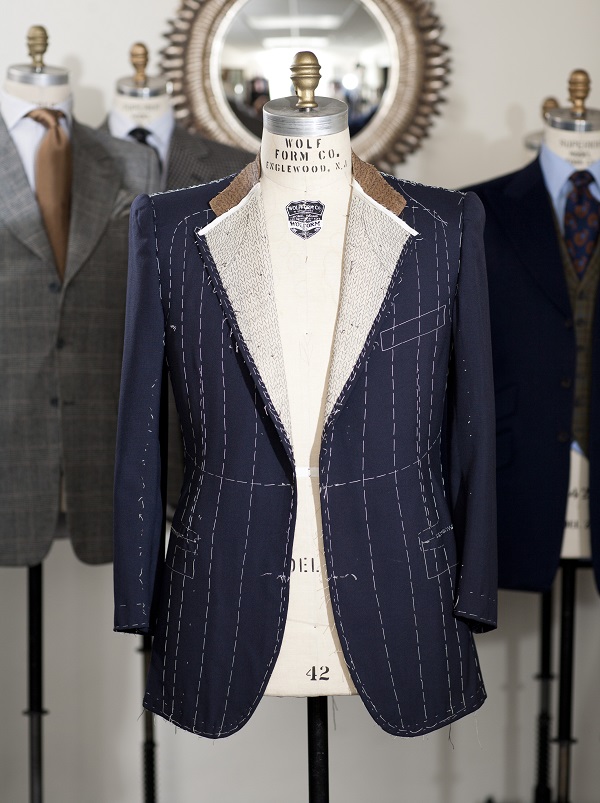
Redefining how you dress is not, as they say, rocket science. But it does take some time and effort. Make deliberate choices; don’t buy cheap shoes that get thrown out when they wear out. The same holds true for tailored clothing. While often expensive, a well-made suit or custom shirt will last for years. A classically styled bespoke blazer or suit will always transcend fashion and adjustments can be made as your dimensions change.

By being selective, you can build a wardrobe that both meets your needs and reduces pointless waste and duplication. And apart from environmental considerations, when your wardrobe consists of items that fit, are well-made, and possess a timeless and stylish quality, you will wear them.

Certain brands, like Slowear, actually design their clothes to not go out of style. Slowear’s family of classically-focused labels evoke a culture of sustainable luxury. They want you purchase a pair of Incotex trousers or a Glanshirt shirt and keep them for years; sacrificing volume for long-term brand devotion. By focusing on the design and construction of their garments, Slowear is able to market what Alan Flusser refers to as “permanent style.”

Reducing your retail carbon footprint extends to accessories as well. Why cycle through five or 10 cheap to mid-grade briefcases or day bags when you could take a little time, define what it is you really want in a bag and then invest in one or two of heirloom quality?

English Briefcase Cognac 300x210 Why Classic Style Makes You a Better PersonFor example, this Frank Clegg English Brief will not only never go out of style, it will become more desirable the more it gets used. It’s the type of bag everyone is always looking for and while not inexpensive, it is a solid capital investment.

Choose ties you love and that pair well with a variety of shirts and jackets. Pick up several pocket squares which can quickly add flair and personality to a tieless suit or odd jacket. Make certain style elements your signature and stick to what works with your body type, skin tone, personality and lifestyle.

That, in a nutshell, is the point of classic personal style. By making choices that take into account long-term investment and near-term benefit, building a wardrobe and curated collection of accessories reduces waste and increases value.

If nothing else, it also clears out your clutter and allows you focus on the things that truly matter. The items in your life should be those that you cherish and want to have around, they should each have a purpose and, to me at least, a story.  And when you present your best self to the world – in your dress and with your accessories – you really do tend to be a better person.