The Smart Side of Style

Tom Wolfe Portrait The Smart Side of StyleBeing called stylish can mean so many things. You dress well, nice haircut, cool bag, great car, impressive art collection. Even how you walk down the street can be stylish – look at John Travolta in Saturday Night Fever. Then there’s the kind of stylish that transcends mere clothing or accoutrement; being smart.

As many women would point out, smart is very stylish.

Now, we are not necessarily talking about book smart or theoretical physicist smart. While that level of intelligence is genuinely impressive, simply being curious about the world around you and seeking out different points of view can make you a truly interesting person.

Good looks will only get you so far; you should also be up on current events, able to carry a conversation, know something about the world, and capable of clearly communicating your thoughts. You don’t have to be an expert on all things, but you should be aware of what’s going on around you and have an informed opinion.  What do you know about other cultures or different political systems?

Can you engage in a basic discussion about why what happens to the Euro affects the price of your favorite beer from Belgium?

Some people, like the brilliant writer Tom Wolfe, above, are both very smart and very stylish. One reason he can carry off his trademark white suit is because his intellect is equally sharp. Mr. Wolfe’s distinctive look is not merely a prop; it’s a physical extension of his wit, humor, and razor sharp intellect.

Alan Flusser via Modern Destiny The Smart Side of StylePerhaps one of the most intellectually forceful arbiters of style is Alan Flusser, right, who happens to be a close friend of Tom Wolfe.  Alan is an intellectual omnivore, fluent in such disparate subjects as publishing, global business, politics, economics, golf, Buddhism, etiquette, and of course the histories of American and English fashion.  Drop Alan into a random cocktail party or boardroom and he can chat with anyone about practically anything.

Turning yourself in into a socially interesting person is not as difficult as you might imagine.  While the prospect may seem intimidating – even manufactured – all that is really required is your taking an interest in the world out there.

For starters, take an inventory of the things that already interest you – art, music, business, economics, or history – whatever they may be. Then, every day, make a point of learning a little something from each of those areas. This is not a test, you don’t have to recall everything verbatim, just keep the information handy and notice where you found it.

Get a daily paper like the Wall Street Journal and skim through the various sections – you can learn about business, finance, marketing, design, media, and politics on your way to work.  Monocle magazine is an OTC favorite for its global briefing approach to telling readers about interesting places, cultures, governments, and design.  It also has a robust online presence that includes a 24-hour streaming radio station.  Apps like Zineo and Zite deliver magazine and newspaper content right to your smart phone or tablet.  Too busy to read – listen to any number of free podcasts on subjects ranging from art history to science to geopolitics.  Better yet, just talk to your friends and coworkers about what’s going on in the world.

What tends makes many successful people so interesting is their breadth and depth of knowledge.  They find the world exciting and can jump from topic to topic, often making and insightful connections.

For example, as a reader of OTC, let’s say that you are interested in style, business, marketing, and global events.  In particular, you are a long-time fan of Ralph Lauren, especially his remarkable ability to identify and dominate so many profitable markets.

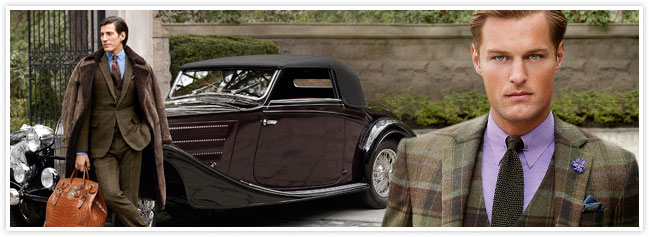
RL growthstrategies banner The Smart Side of Style

Ralph Lauren is not only a store; it is a multifaceted, publicly held corporation.  Hop over to its investor relations site and peruse the company’s growth strategies and earnings releases.  Even if you only focus on the press releases and corporate profile, the picture of a diverse and global industry quickly comes into shape.

And, if you can find them, track down the pre-Regulation FD annual reports; they are nice enough to put on your book shelf.  The decidedly less design-oriented but current online annual report can be found here.  Take a look; even if you are not a numbers person, it’s pretty fascinating to see the nuts and bolts of how businesses operates.

As you continue to read up on Polo’s real estate holding, licensing deals, distribution networks, and marketing and financial news, you will see a network of stories that touch on everything from import/export tariffs to the migration of global manufacturing jobs.  Remember the outcry over the company not manufacturing Team USA’s Summer Olympics opening ceremony outfits in the United States?  Their commitment to doing so for the next Winter Olympics resulted in a fascinating case study in the economics and politics of fashion.

Focusing on even just one company like Ralph Lauren can teach you volumes when it comes to market segmentation, global menswear production, political issues facing the textile industry, and how cultural expectations affect product development.  Not only will you have a greater understanding of the business of fashion, you’ll also have a lot to talk about at your next cocktail party.

So, as you work to perfect your wardrobe, choose a new pair of bespoke shoes, or track down the perfect briefcase don’t forget to look around and learn something about the world. Becoming a better global citizen is about as stylish as you can get.


OTC x Trident Gum: See What Unfolds

fb steveaoki vote banner 02 OTC x Trident Gum: See What Unfolds

Our friends at Trident Gum have asked that we let OTC readers know about a great contest that just launched over at their Facebook page.

You can help make an aspiring filmmaker very happy and possibly cast the deciding vote on the official Steve Aoki/Duran Duran video for their recent remix of the 1980s classic “Hungry Like the Wolf.”

OTC is all about making classic style modern, and the same holds true for classic music.

Last month Trident kicked off its summer-long “See What Unfolds Live” series where approximately 3,000 fans were treated to an unforgettable performance hosted by DJ Steve Aoki that included an appearance by legendary pop superstars Duran Duran.  Yes, they still rock.  The night’s defining moment was a Steve Aoki produced and remixed performance of the band’s classic hit, Hungry Like The Wolf, aptly named, “Hungry Like The Wolf: Steve Aoki vs. Duran Duran – The New York Werewolf Mix.”

Trident launched a music video competition on Genero.TV, an online community well-known for connecting artists with fans and filmmakers alike, and enlisted users to get in on the fun by creating their own music video for the new track. The jury winner will receive $10,000, with two runners up each winning $2,500. The winner chosen by the fans will get $5,000.

And this is where you come in.  Starting today, you too can be a part of music history! Help choose the official music video by voting for one of the four finalists.  With $20,000 in total at stake for the finalists, it’s no light decision!

Voting is scheduled to close the evening of July 26, so don’t delay!

On June 29th, the winning video will be announced as the official video of the collaboration.

To vote for your favorite video, just heard over to Trident’s Facebook page.


A Brand Called “You” (Part 2)

JCrew Mens Shop via juncture. A Brand Called You (Part 2)

In part one of this essay, we discussed some of the changes that have begun to redefine the concept of brand loyalty. While consumers may still be loyal to a given brand, the way in which they interact with that brand is much more fragmented, delineated, and nuanced

It’s still an ongoing shift of course, but the edges of the new pathway are becoming clearer. In plain terms, what is changing, and by extension changing how companies market their wares, is that many customers no longer look to a single brand or “lifestyle” to define who they are.

For example, not long ago, a person looking to express their patrician aspirations might say, “I choose to identify with Ralph Lauren.” Today, that same customer is more likely to state, “I like Ralph Lauren polo shirts, but I like Lumina oxfords, and Freeman Sporting Club suits. I prefer Raleigh Denim jeans and American Giant tees.” The ability of a single brand to define a customer’s life is fading. Smaller, specialized brands that produce high-quality products are allowing customers to themselves create their own “lifestyle branding.”

whatmensstyleblogshouldibereading flowchart tetnc1 367x1024 A Brand Called You (Part 2)Driving this reversal in influence is of course, social media. Never before have people been able to access so much information about trends, products, reviews, and prices. In mere minutes, I can find out who makes the best messenger bag or thick-soled cordovan wingtips, read a detailed review on a blog, and even get on the phone with the guys who actually makes those shoes.

I can post a picture of my new shoes on Pinterest or Fancy, tweet the makers’ link to my Twitter followers, review my new shoes on Facebook, and – if I have time – make a quick “box-opening” video for You Tube (unfortunately, that’s not me with the new Rolex!).

That is serious consumer power.

Combined with an economy that continues to stagnate on many fronts and you have a retail landscape that requires a company to explain in clear terms why, exactly, it should matter to a customer. With purchases and products being scrutinized by customers like never before, labels that grew at a global scale and licensed out all their branded accessories face buyers tired of sub-par quality for the sake of a name. It’s fair to say that smaller brands with tight controls on design, production and quality – and that actually make things people want to buy – will gain in the evolving loyalty game.

Almost by default, luxury – or at least quality – will again mean exclusivity.

All bout the guys
At the same time, menswear in particular is faced with an exciting trend. All those men who for generations did not care much about this season’s Pantone color or whether summer scarves are “in” are not only becoming active in their fashion choices, they are actually becoming market movers.

Across the spectrum of retail, men are taking a more active role in outfitting their own wardrobes, carefully selecting accessories, and fussing over things like quality and provenance. Retailers have taken notice and many have broadened and deepened their menswear selections.  The smart ones fixate on quality and heritage, to use an overwrought term.  More so than women, men want products with a story or background.

The reasons are myriad, but growing numbers of guys have shaken off the stale myth that they should not care about style, fashion, luxury and looking good. When OTC launched way back in 2006, there were at best a handful of blogs dedicated to menswear. Today, men are looking for help and advice on all matters sartorial. They actively seek out information and feedback about products, brands, and trends that interest them.

More to the point, they are also looking for validation and community about the brands that they like. The brand itself is not enough; they want to be part of a sartorial tribe. To be sure, there is also a strong desire to stand alone and be unique. We all want the one thing that sets us apart from the herd – but not too far. We want to stand out just enough to let the other guys know we are our own person, but not be a jerk about it.

Calling the branding shots
As the concept of what exactly a brand means and who decides if it’s worth something becomes more decentralized, defining who you are is becoming more personal and individual. And with men educating themselves about style, fashion, etiquette and luxury, brands that heretofore could consider themselves one-stop-shops will have to change their approach.

J. Crew is a good example of a company the early on identified the trend of men taking their image, and shopping, into their own hands. In addition to its SoHo Liquor Store men’s-only shop, the company intently focuses on its male customers through dedicated catalogs, additional menswear focused retail outlets, and it’s much-copied, “in good company” collaborations.

Anchor Division Image Frank Clegg 1024x680 A Brand Called You (Part 2)

This approach allows the overall brand to remain whole but provide customers with a sense of individuality and more importantly, the feeling that these specialized products and shopping experiences meet a higher standard.

It all boils down to a growing customer base that simply does not need to be told who they are, what they really want, or what kind of life they should lead. They may read lots of fashion and style magazines and check out yours truly on the Web, but they are the ones who decide what their “look” is. Brands need to meet their approval.

This may explain why many of the coolest brands are also niche ones. And for these folks success does not necessarily translate into huge market share or big profits. Those things matter of course, it is about business at the end of the day. But it is also, more often than not, about passion, as with Will Lisak of ETWAS Bags.

These “bespoke” brands specialize in a particular slice of life, perspective, product, or philosophy. They tend to be brands founded by someone in love with a certain idea or type of product, like innovative bag maker J. Panther Luggage Co. or upstart shirting company Hugh & Crye. They see things a little differently and understand that their genuine individuality and dedication to quality and service are the keys to success in this new retail landscape.

They know this because they are also consumers. And more often, today’s menswear customers already know who they are or want to be; they don’t need instructions.

Put another way: the brand needs to fit who I am, not the other way around.


A Brand Called “You”

Luxury Brands A Brand Called YouBrand allegiance is a funny thing.

When it works well the customer identifies with the brand in a deep, meaningful, and personal way.  When it doesn’t work – most likely when the brand lets a customer down in some way – the old loyalty can be almost impossible to truly win back.

While women are still targeted by designer trends, men traditionally stick with a brand they like and trust.  Over the past several years, designers and marketing departments have been working overtime to encourage men to think and shop more like women – season to season, for example.  That approach to the menswear market has had some limited success, but for the most part guys are still guys.

Today, it is a given that each one of us is our own brand ambassador.  We can pick and choose from dozens of small, artisanal, heritage, and hand-crafted brands that produce quality goods ranging from bow ties to bicycle seats, briefcases to brogues.  We select the brands that best define us, choosing the things of our life much like a curator selects an artifact for display in his museum.

It wasn’t so long ago that this sense of sartorial independence and style ownership simply didn’t exist.  The remarkable and landscape-shifting trend in which the customer is more or less his own brand is a recent one.  For a very long time larger homogenized brands like Ralph Lauren, Tommy Hilfinger, and Brooks Brothers held dominant positions in menswear when it came to defining the parameters of style.  Global brands had reach, manufacturing leverage, big marketing budgets, and a lock on most markets.  They defined what “classic style” and “preppy” meant for many male consumers.  The brands more or less told the consumer what he should want, and charged a premium for the privilege of getting it.

But, in November 2008, the retail world turned upside down.  When the luxury retail economy collapsed along with everything else, the jig was up. Almost overnight, the very concept of brand loyalty and even the basic understanding of how a consumer sees their favorite brand, logo, or company, had dramatically changed.

Saks 5th at Christmas 1024x709 A Brand Called YouThe crash of mass couture all started with Saks Fifth Avenue.

There were already fears about economic problems in the months leading up to the 2008 holiday shopping season.  But as Black Friday rolled around, the retailing earth shook when, without any pretense or warning Saks, the bastion of luxury retail, preemptively slashed prices on designer clothes by 70 percent.

This was unheard of; the designers from whom Saks Fifth Avenue purchased high-end goods were caught totally off guard and other major luxury retailers were forced to quickly follow suit.  Soon after, boutiques and then second-tier retailers were forced to massively reduce prices.

A cardinal rule of luxury retail had been broken and overnight already skittish consumers were suddenly wondering if their Louis Vuitton duffle bag or designer jeans were ever worth what they had paid only the day before.

What followed was nothing less than a reshaping of the luxury retail landscape. Saks had correctly surmised that this was the last hurrah of the luxury-for-all boom years and acted in an appropriately dramatic fashion to try and salvage what sales it could from a rapidly deteriorating market.  The rest of the high-end retail universe soon saw the writing on the wall and slashed their already low holiday sales prices to the bone and prayed for the best. Then they slashed again.

Only now, nearly five years on, is the luxury goods market taking some tentative steps toward reestablishing a connection with the mid-tier consumers previously enamored with their logoed goods.  However, for many the magic is long gone.

The spell of mass-market exclusivity was broken back in the winter of 2008.  As the economic dust settled, the value that customers saw in their big-brand luxury goods – clothing, accessories, watches, and even automobiles – was sharply questioned. What is the real worth of my Gucci briefcase?  How exclusive or special is something if everyone else has it – or at least can have it?

It was bad enough that mass-luxury retailers like LVMH Louis Vuitton Moet Hennessy, Gucci, Coach, Prada, and even Tiffany & Co., had diluted their luxury status by aggressively courting middle class consumers with mid-priced products to drive their incredible growth.  Now, they were no longer being viewed as luxury brands.  They were more like luxury image brands; form but little substance.

In a race to capture aspirational money, these companies had targeted average folks who wanted to live slices of the high life by way of expensive accoutrements.  In doing so, many luxury houses left disillusioned the truly wealthy who had helped build up their brand’s cache to begin with.

When the bottom fell out of the retail market, all those teenagers and newly minted MBAs (e.g. those who acted wealthy because they could float a luxurious life on credit) vanished overnight.  Just like that, the plastic powered cash cow of mass luxury stopped spending.

Then the other hand crafted cordovan slip-on dropped.  As the economic tsunami kept on rolling, to this very day even, it ultimately pulled under a formerly recession-proof demographic: truly wealthy people. They may not all be broke, but they sure stopped spending like they used to.  When people who are actually rich stop buying things you know it’s bad.

A brand that did not compromise

logo hermes paris A Brand Called YouAs the luxury goods market struggled to come to terms with what had just happened, only one label emerged relatively unscathed – Hermes.  While always appreciating and welcoming its less than moneyed customers, the company never altered its brand or marketing strategy to exclusively attract them.

Hermes is unabashedly a luxury brand and has never apologized for it. This kind of loyalty to its primary customer base, those with disposable cash money, has helped the company remain relatively secure during this period of intense retail upheaval.

With healthy cash reserves on which to lean during tough times, Hermes was able to retain its highly skilled staff, focus on its market, and most importantly, buy time as its market recovered.  The added benefit of Hermes having never embraced “logoed” retailing became clear as consumers quickly found it unseemly, should you have the money, to flaunt overtly designer brands. A Hermes bag, though prohibitively expensive, is luxuriously devoid of logos or even a nameplate.

Hermes has been able to thrive in this downturn because its obsessive focus on quality and perfection remain true to the brand’s heritage.  Hermes never lost its mystique, the most valuable asset of a luxury firm.  Additionally, these key attributes became touchstones for many style influenceers as the mantras of quality, heritage, craft, and meaning gained prominence.

For all those other brands that had heretofore defined the lives we all were supposed to want, everything had changed. They suddenly looked jaded and false, pretentious, and gaudy. In the blink of an eye everyone realized that they had been living in someone else’s marketing plan.

Without those brands and their worlds to define us (or least define us less), how would we now define what brands meant to us?

It’s all about you
It turned out that many smaller and specialized brands – some now very familiar – had been waiting for their shot at the brass ring.  At the same time, some consumers began to turn away from mega brands and finally think about what message they were telegraphing about themselves.  As they looked around, guys began to see other options rich in design, craftsmanship, style, and quality.

Untitled 1 A Brand Called YouEqual parts economic pressure and individual desire helped turn consumer focus toward decidedly old-school metrics: cost and value.  Products with history, enduring style and tangible quality became cool.

Blogs and websites began to talk about old brands, small brands, heritage brands, made-in-America brands and the benefits of unique over common.  The idea of craftsmanship is again paramount.  J. Crew caught this movement early and deftly created its “in good company” strategy, thanks to which an entirely new generation knows of brands like Alden.

At its core, the feeling is that if I’m going to buy something expensive and luxurious, it should be unique and hand crafted.  Instead of three “luxury” off the rack suits, I want one custom suit that will last for years.

With consumers taking over the job of promoting or dismissing luxury goods via blogs, twitter, or Facebook, and simply by communicating with each other and bypassing traditional advertising altogether, the definition of branding is changing as well.

Your personal style is now your logo
In fact, it seems that now we’re the brand. Designers and marketers are looking for ways to get their products associated with people. It’s not just about us wanting to live in their worlds, now they want to be worthy of our personal brands.

It’s now about the brand of you.

The second half of this essay will discuss how these changes have turned the concept of branding on its head. So stay tuned…


IamSammo bowtie flower1 768x1024 Artist Sammo Puts Menswear on the Wall

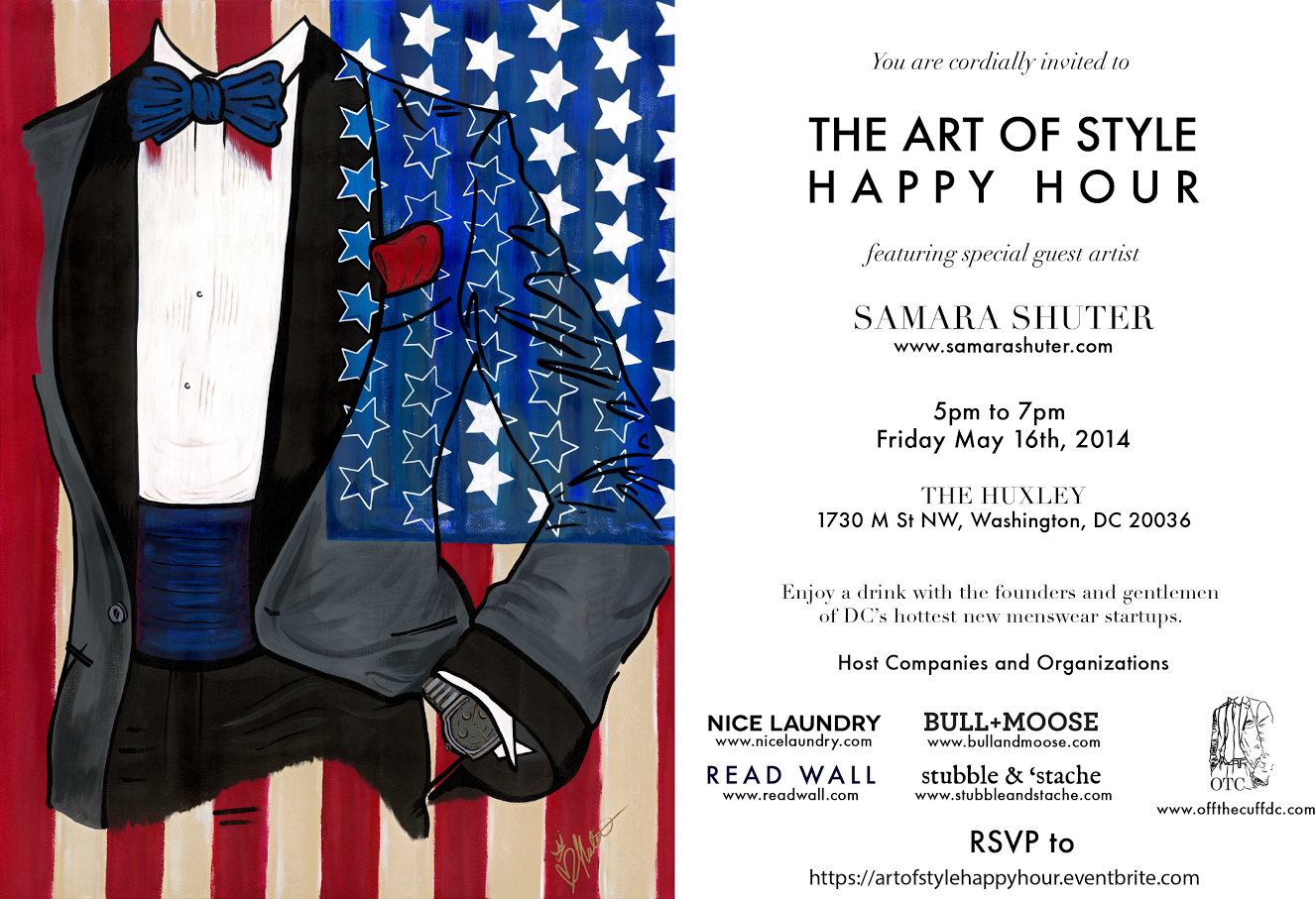
Canadian artist Sam “Sammo” Shuter gives classic menswear a visual punch and colorful twist that we flat-out love.

Her vivid and creative take on suits, ties, jackets, and the other staples of a well-dressed man’s wardrobe are brought to life in bold colors and strong, purposeful brush strokes.  The clever riff of mixing high style with a contemporary color block design creates something both modern and stylistically transcendent (that would be art-speak for, “We’ll always like it, even in 20 years”).

It’s very now, but Sammo’s style also seems to reference the ’60s Factory aesthetic to some degree.  She’s having fun with the formality of menswear, perhaps hinting at the secret peacockery of the man inside the sharp suit.

Whatever the inspiration or influence, we just plain like it.  The image above, The Introduction: #8, would look darn sharp on OTC’s office wall.

Visit Sammo’s website and learn more.